
Excerpt from Nadja Dietrich’s Novel Emperor’s Eyrie
Part 1 of Nadja Dietrich’s novel Emperor’s Eyrie is set in a psychiatric ward. The longer the diarist and protagonist of the novel is kept there, the more he is affected by the image that is created of him there.
The longer I have to stay in this institution, the more I begin to doubt whether the images in my head correspond to reality. It’s like looking as a colour-blind person at a painting together with 99 other people who are not colour-blind. At some point you will realise that you don’t see the colours as they are in reality.
No, the comparison is badly chosen! The colour-blind person’s deviating perception is based on an organic anomaly, which can be proven scientifically if the person in question insists on the „truth“ of the deviating perception.
Furthermore, this case is only about a tiny nuance of perception. Blue or green, what difference does it make! From me, by contrast, all reality has been stolen, I have been mentally expropriated, so to speak, and now find myself in a reality-less space, alone with the images in my head: a castaway on the sea of the mind, gradually drowning in his inner storm surges.
After all, the colour-blind person can also take comfort in the fact that „reality“ is something very relative: Do the flies see reality incorrectly because they see it differently? I, however, am not concerned with an epistemological problem, but ultimately with a question of life or death. If what I have seen is true – and why should I doubt it? –, there is a sadistic gang of murderers roaming around somewhere, just waiting for the opportunity to commit another dastardly crime.
Perhaps the murderers have in fact already struck again since my arrest. If what I assume is true – that the perpetrators cover up the traces of their crimes with an eerie (because reality-distorting) meticulousness –, nobody can know what other bloody deeds they have committed in the meantime.
The worst thing is that I’m really starting to feel like I’m losing my mind. The diagnosis of „mentally ill“ is like a self-fulfilling prophecy. It’s literally driving me crazy that I can’t talk to anyone about what happened to me – or rather, that I can only talk about it as if it were the delusions of a junkie.
It’s not just the fact that people think I’m crazy that torments me. Since my inner images are denied osmosis with external reality, they have developed a momentum of their own within me that eats away at me from the inside out like a mental cancer. The images proliferate, they constantly give birth to new images that take on grotesque forms in my dreams and mix with long-forgotten thoughts, feelings and events.
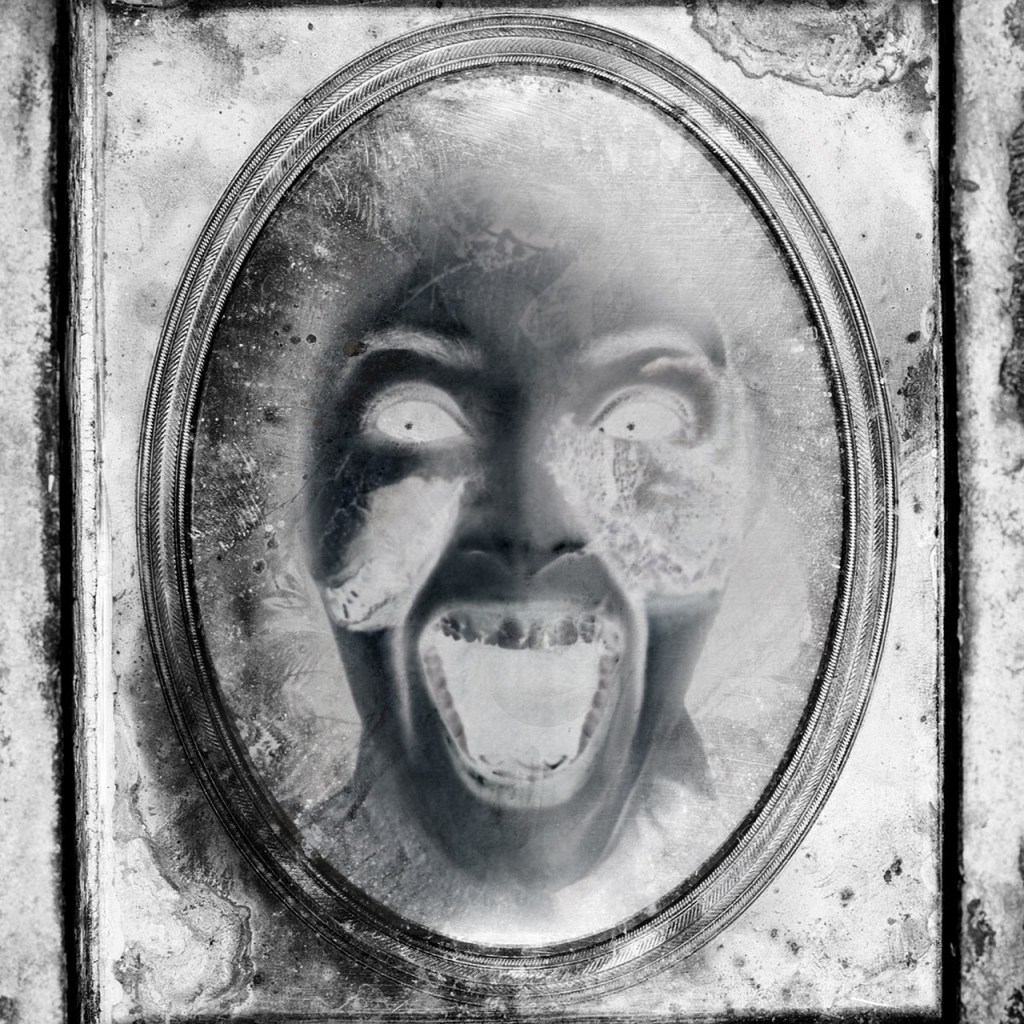
As a result, I emit these guttural screams at night, which make those suffering from nightmares seem like the ghosts that haunt them. Time and again I wake up breathing heavily and drenched in sweat and have to ring for the night nurse to get a sedative. A glass of wine would probably have the same effect, but of course you can’t get that here.
At the same time, I know very well that the nurse will report the incident to the therapist – after all, she is obliged to record every move in a chart. Thus, at the next therapy session, I will once again be confronted with this fake compassionate I-do-understand-you grimace, which stares at me from all sides like a distorted mirror image here.
This has already made me freak out heavily a few times. Although my outbursts emphasise my status as a lunatic, they are one of the few freedoms you have when you’ve been officially classified as mentally ill. And since I can’t change anything about the image that has been created of me here anyway, I can also benefit from the advantages that my situation entails. So sometimes I throw the coffee cup against the wall – it’s only made of plastic, but when it’s full it still causes quite a ruckus – or I let out wild jungle screams until the nurse comes to calm me down.
Admittedly, I only do this when Madeleine is on duty. She’s one of the more progressive types of carer, who first tries out gentle methods before resorting to tablets and injections. Moreover, there is something distinctly maternal about her. With the soft fat pads that surround her body like cushions of air, she feels like a warm bed of moss that makes you forget the insidiousness of the world for a few moments. That’s why it simply makes me feel good to be hugged by her from time to time.
Then I sigh from the bottom of my heart, while she strokes my head like my mum used to do when I fell to my knees riding roller skates. I think she knows exactly what I’m trying to achieve with my outbursts – even if she would probably prefer me to articulate my wishes in a different way.
But in the social environment we are in here, my outbursts are the only code that allows me to draw attention to my need for closeness. I can’t just say to her: „Oh please, give me a little hug“ – that’s just not acceptable in this setting.

Image: Sarah Richter: Portrait (Pixabay)

 Planet Literature
Hinterlasse einen Kommentar