
About León Giecos Argentine Peace Hymn Sólo le pido a Dios (The Only Thing I Ask of God)
León Gieco’s peace song Sólo le pido a Dios should of course not be missing in an Advent calendar dedicated to peace. Like hardly any other song, it highlights the importance of civil courage and disobedience for the achievement of a more peaceful world.
A Song Against Indifference and Complicity
León Gieco’s peace hymn Sólo le pido a Dios (The Only Thing I Ask of God) addresses the problem of the indiffernet followers, on whom inhumane regimes have based their power at all times. The central appeal of the song is therefore to stand up for human rights without compromise and not to become indifferent to the injustice that happens every day.
Since this appeal is not directed at others, but is formulated as a kind of self-exhortation, it gains a particular credibility: only if everyone questions their own behaviour can inhumanity be eradicated.
However, lasting peace can only be achieved if violations of human rights are prosecuted and not forgotten. Overcoming indifference in the song therefore also includes the call to remember the present crimes later – as the only way to effectively prevent the recurrence of inhumane conditions.
The Song against the Background of the Argentine Military Dictatorship
The song Sólo le pido a Dios was written against the background of the Argentine military dictatorship (1976 – 1983). The latter also drove Gieco into exile for some time.
Thus, the songwriter could also relate to himself the threat that General Ibérico Saint Jean, governor of the province of Buenos Aires under the military junta, made in 1977 in a speech on the First of May: „First we will kill all the subversives, then their comrades-in-arms, then their sympathisers, then the indifferent, and in the end we will kill the waverers“.
The words must be seen in the context of one of the greatest human rights crimes in the second half of the 20th century: that of the „desaparecidos“ (disappeared persons), i.e. people whom the henchmen of the dictatorship made disappear without a trace, for example by dropping their bodies from aeroplanes over the sea.
The legal processing of these human rights crimes was initially very hesitant, as the military still had great influence in the country after the end of the dictatorship. For example, General Jorge Videla, who headed the military junta until 1981, was not finally convicted of the crimes for which he was responsible until 2010, a quarter of a century after the end of the military regime.
About León Gieco
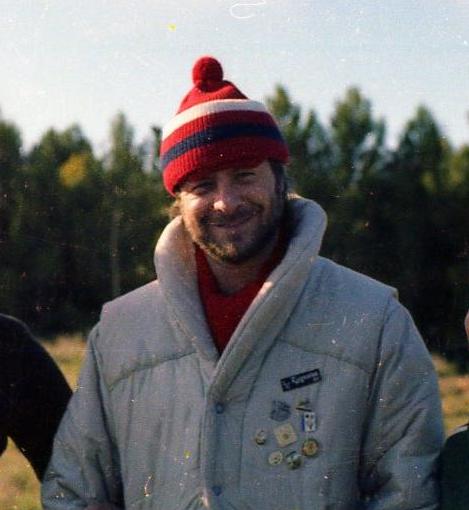
The singer-songwriter was born in 1951 in a rural region of the Santa Fe province in north-eastern Argentina. After initially participating in joint musical projects, he started his solo career in 1976 – in the difficult environment of the Argentine military regime that determined the country’s fate until 1983.
The political commitment that Gieco expressed in his songs put him in the military junta’s crosshairs from the start. After some of his songs had fallen victim to censorship, he had to flee to the USA for some time in 1978.
In the same year, the song Sólo le pido a Dios was released. It quickly became an anthem of resistance in Gieco’s homeland. In the following years, it was also sung by numerous other famous musicians (including Mercedes Sosa) and became an expression of protest against authoritarian regimes and antisocial conditions throughout South America.
As an icon of resistance against the Argentine military dictatorship, Gieco remained extremely popular in Latin America even after its end. He also toured outside his home country and worked with various other politically committed musicians, including Pete Seeger, Bruce Springsteen and Peter Gabriel.
Quotation taken from: Comision de los exiliados argentinos en Madrid: Palabras para no olvidar (Words that must not be forgotten; translated from Spanish).
The Only Thing I Ask of God
The only thing I ask of God
is that I may not be indifferent to pain;
that my heart may not be empty and lonely
and that what I can give, I will have given
when the scrawny hand of death
reaches out for me.
The only thing I ask of God
is that I may not be indifferent to injustice;
that I don’t let myself be slapped
on the other cheek as well,
when the unjust fate
should someday make me its tool.
The only thing I ask of God
is that I may not be indifferent to war,
this monster that crushes with thundering steps
the innocence of the poor.
The only thing I ask of God
is that I may not be indifferent to betrayal;
that the many, though they can do less
than one single traitor, yet judge the betrayal
with their remembrance.
The only thing I ask of God
is that I may not be indifferent to the future;
that I don’t get lost
in a lost world.
León Gieco: Sólo le pido a Dios
[Album No.] IV (1978)
Live (1982)
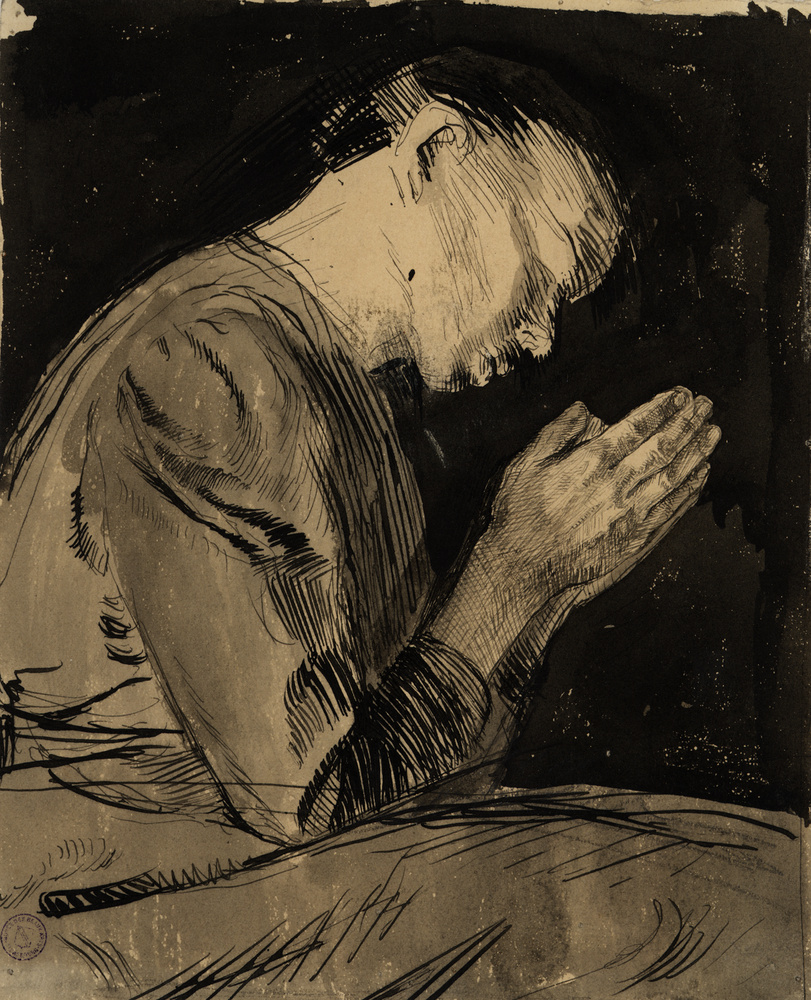
Images: Käthe Kollwitz (1867 – 1945): Praying woman (1892), Desost: León Gieco (1981); Wikimedia commons
 Planet Literature
Hinterlasse einen Kommentar