

Excerpt from Nadja Dietrich’s Novel Emperor’s Eyrie
The sublime and the terrible – nowhere are they closer than in the mountains. This applies to the mountains themselves, but also to our dealings with them.
Isn’t it strange that people can find the mountain world beautiful? A world that was not made for them, a world in which everything rejects them, in which every loose stone can mean their death? A world in which every gust of wind is fuelled by those elemental forces whose unleashed sceptre is anxiously feared in the lowlands?
But perhaps that is precisely what attracts us to the mountains: that they open a window into the world of the absolutely unfamiliar, the completely different.
The most obvious attitude in the face of the mountains is therefore that of contemplation, of immersion in the infinite harmony that is hidden in the mountain ranges extending to the horizon and in the bizarre wordless language of the rocks, in their crests folded as if in prayer, reflecting our reverent amazement in view of the immeasurable power of creation, our childlike plea that this power may not let us fall from its grace.
Nowhere is the proximity of the sublime to the terrible more evident than in the mountains. And this is not just a question of perspective – in the sense that the sublime reveals itself as the terrible when we get too close to it and are crushed by its irrepressible power.
Rather, the terrible also takes the place of the sublime where we disregard its self-contained, untouchable sphere and try to tame it; where we eat our way through the rock massifs with gigantic steel worms and ram concrete pillars into their skin; where we glide to the summits on steel cables like giant predatory spiders. Here, too, all that remains of the duality of the sublime and the terrible is the latter.
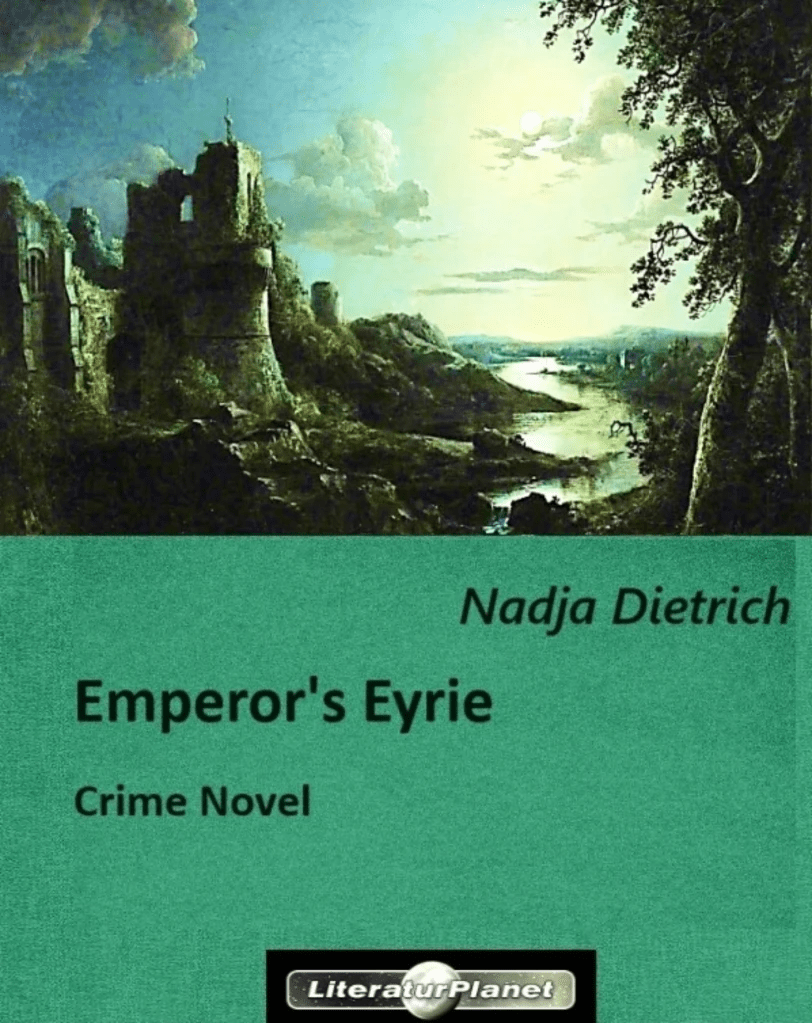
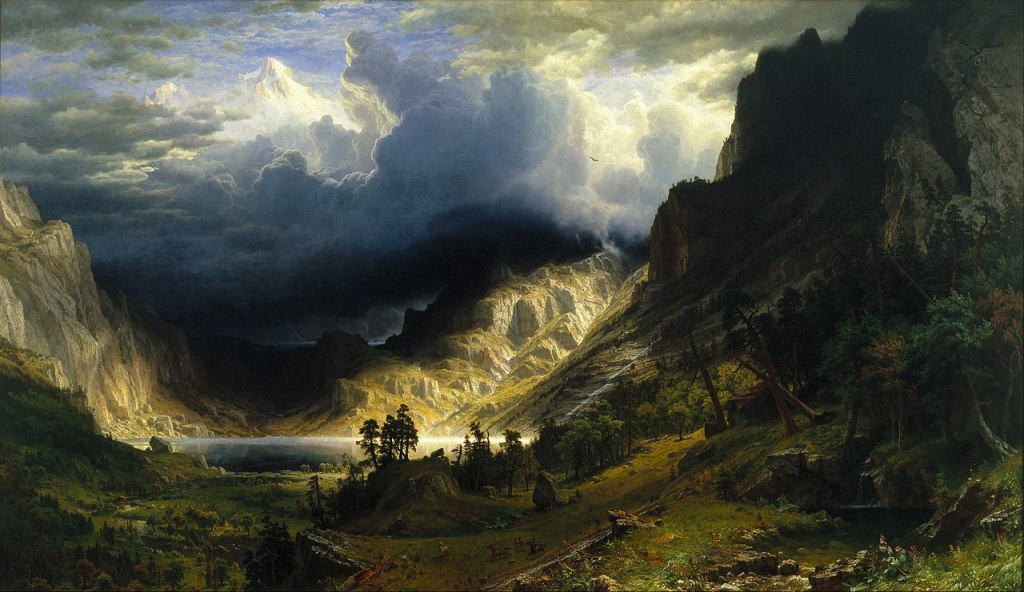
Image: Albert Bierstadt (1830 – 1902): A Storm in the Rocky Mountains (1866); New York, Brooklyn Museum (Wikimedia Commons)


Kommentar verfassen