

Mrtví: A Poem by the Czech Writer Jan Skácel
Set to Music by Jiří Pavlica and the Musical Group Hradišťan
Do our loved ones disappear from our world when they die? Or do they remain a part of our lives forever? – On a poem by the Czech poet Jan Skácel, set to music by Jiří Pavlica and the music group Hradišťan.
Jan Skácel: The Deceased
Those who have passed away –
in truth they are still among us.
Their shadows caress our hearts,
the dust of their stars sparkles on our path.
Their faces, seemingly vanished,
are still a mirror of our own selves.
From the cornflowers they touched,
the fragrance of their hands still wafts to us.
The bell of my soul echoes with your voice,
let me be your silent home.
Jan Skácel: Mrtví; from: Oříšky pro černého papouška (Nuts for the Black Parrot; collection of poems, contained in the volume Naděje s bukovými křídly – Hope with Beech Wings, 1983)
Setting by Jiří Pavlica & Hradišťan
from: O slunovatru (DVD, extended version of the CD of the same name from 1999)
On the sense of commemorating the dead
The commemoration of the dead is, like so many things in life, an ambivalent matter.
Re-animation of the deceased
For one thing, we know that those who have passed away will only have fully disappeared from the world when their image fades in our hearts. This is the deeper meaning of all our days of remembrance. Basically, they are reanimations in a spiritual sense, that is, a resuscitation of the soul (anima) of the deceased. Or more precisely: they serve to maintain the bridges on which the souls can walk from one world to the other.
At the same time, the commemoration of the dead is always something painful. For precisely when we recall the image of the dead in a concrete way, we become aware that they have gone forever; that the happy days when we were allowed to share life with them will never come back.
Painful confrontation with the dark side of life
In addition, we become aware thereby that the dust of life allotted to us also trickles ever faster through the hourglass; that the scales of life tilt ever more strongly towards the dark side under the weight of the days we have already lived through. So we are all too easily tempted to treat the commemoration of the dead as a chore or even to disregard it altogether – and thus to kill the deceased a second time.
Jan Skácel’s five succinct stanzas offer, it seems to me, a simple solution to our dilemma. What if we did not wreathe our deceased with the crown of shadows of death at all, but simply regarded them as part of our lives? Wouldn’t it then be much easier to maintain the bridge to them?
Death as part of life: the example of Mexico
That it is possible to integrate death into life is shown not least by the commemoration of the dead in other cultures, where the deceased are quite naturally included in the everyday life of the living. Just think of the Mexican Día de los Muertos (our All Saints‘ Day), when families visit their deceased like old acquaintances in the cemeteries and eat, dance and sing with them as a matter of course.
Admittedly, that might be a bit too loud for us. But it does show a very different view of death, in which the latter remains a part of life instead of being regarded – like in our culture – as a shadowy realm, where the principles of life are suspended.
The deceased as a bridge to the other world
The idea that our deceased enter this shadowy realm alienates them from us. More than that, it leads us to develop a superstitious fear of the dead and of remembering them – as if they were now serving another master who, like the revenants in fairy tales, transforms them into potential enemies.
If, on the other hand, we preserve the dead as part of our lives, they can repay us for this service of friendship with a corresponding service of friendship: They can help us overcome the fear of death, which would then also be accepted as a natural part of life.
About Jan Skácel
After studying philosophy in Brno (Moravia) in the south of the Czech Republic, Jan Skácel (1922 – 1989) first worked in newspaper and radio feature sections: first for the daily newspaper Rovnost (Equality/Egality), then, from 1954 to 1963, as literary editor for a radio station. He then headed the cultural magazine Host do domu (Houseguest) as editor-in-chief.
After the magazine was banned in 1969, Skácel could only publish his own works via samizdat, i.e. secretly. However, his activity in the cultural sector and the five volumes of poetry he had already published by then had helped him achieve a certain reputation.
When he was allowed to publish more freely again after 1981, his poems therefore quickly found approval among the literarily interested public. Today Skácel is an honorary citizen of Brno.
About Jiří Pavlica & Hradišťan
In 1950, the music group Hradišťan was founded in the town of Uherské Hradiště in the south-east of the Czech Republic. Its initial aim was to promote the region’s traditional folk art. This involved, above all, keeping the cymbal tradition alive – that is, the local dulcimer music.
Over time, the group expanded its repertoire and increasingly incorporated other instruments – particularly string instruments – into its work. The musical performances were also increasingly combined with dance interludes.
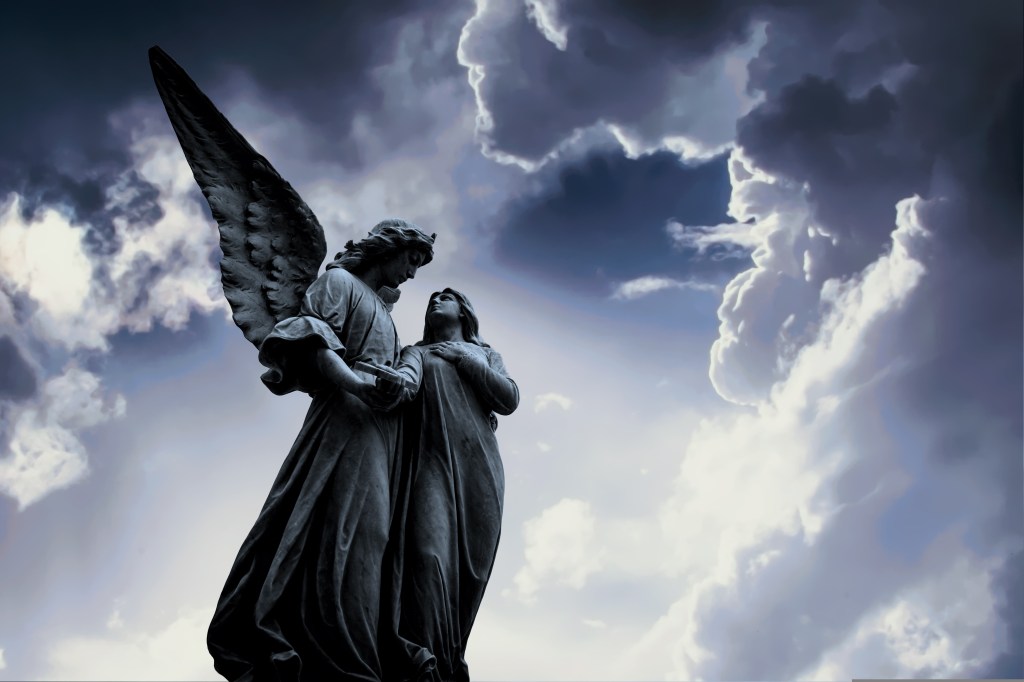
Image: TheDigitalArtist: Cemetary (Pixabay)


Kommentar verfassen